Between-visit support
Check-ins, grounding, journaling prompts, Tiny Plans, sound, and reflection that a teen can use outside appointments.

For doctors and clinicians
Breemaia is being shaped as a private wellness companion for between-visit support, self-regulation practice, reflection, and resource navigation. It is not therapy, diagnosis, medical care, or emergency response.

Clinical-fit summary
The product is meant to make small supportive actions easier in the gap between everyday stress and formal care.
Check-ins, grounding, journaling prompts, Tiny Plans, sound, and reflection that a teen can use outside appointments.
Visible support pathways and emergency/crisis resources when the app should not be enough.
Plain language around not therapy, not diagnosis, not crisis response, and not an unrestricted AI friend.

Review the fit
The scope is intentionally legible: wellness support, between-visit practice, safety boundaries, review questions, and clear moments when real care comes first.
Safety questions
Breemaia is being prepared for serious review before stronger claims are made. We want feedback on safety, age range, escalation wording, AI boundaries, and the privacy/consent model.
Current product proof
These are current app proof points to review carefully, without clinical outcome claims.
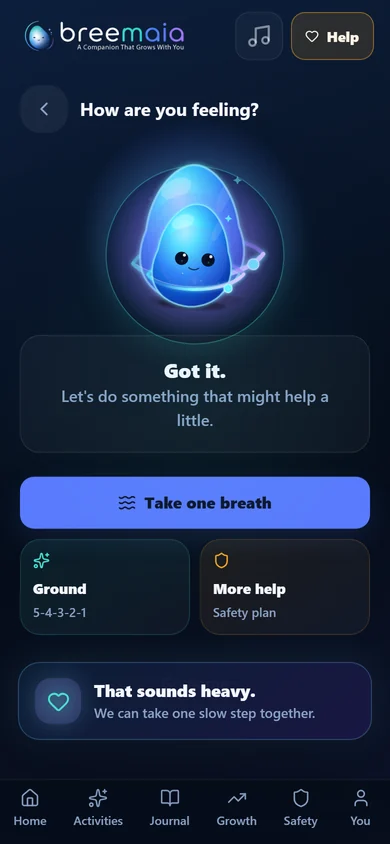
A feeling is acknowledged without turning the moment into a clinical assessment.
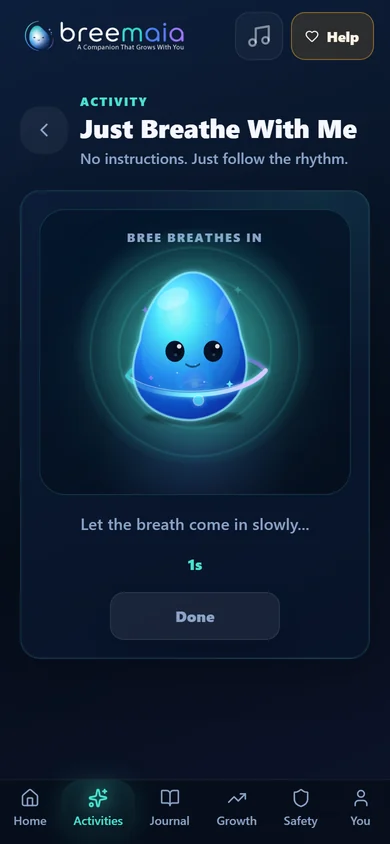
A contained activity with a clear beginning, rhythm, and end.
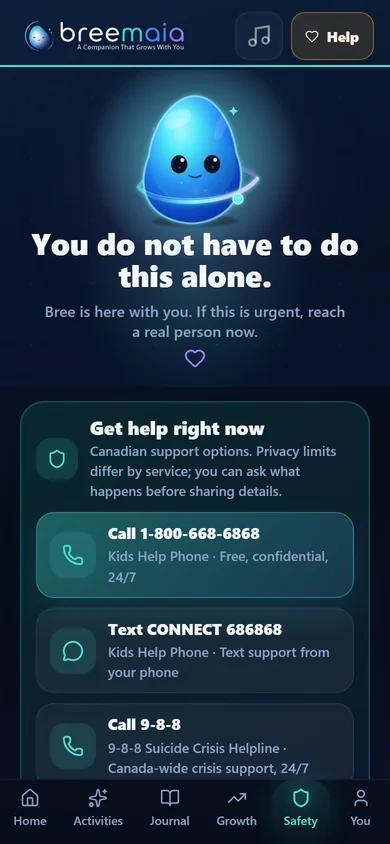
Safety resources remain prominent when an app should not be enough.
Current preview-build experience. Interface and copy may continue to change.
Review guardrails
Breemaia earns confidence by being reviewed before it sounds bigger than it is.
Does the site make clear that Breemaia is wellness support for reflection and self-regulation, not treatment?
Which situations should route immediately to emergency services, crisis lines, guardians, or direct clinical care?
Are the AI, companion, and safety-boundary terms cautious enough for minors?
What should be reviewed before a school, clinic, or youth-organization pilot is considered?
Professional review
We are seeking feedback from doctors, psychologists, psychiatrists, counsellors, school mental-health leads, privacy reviewers, and safety advisors.